
January 31st is barreling toward you like a patient who ignored your advice for six months and suddenly wants a miracle.
Time is not on your side.
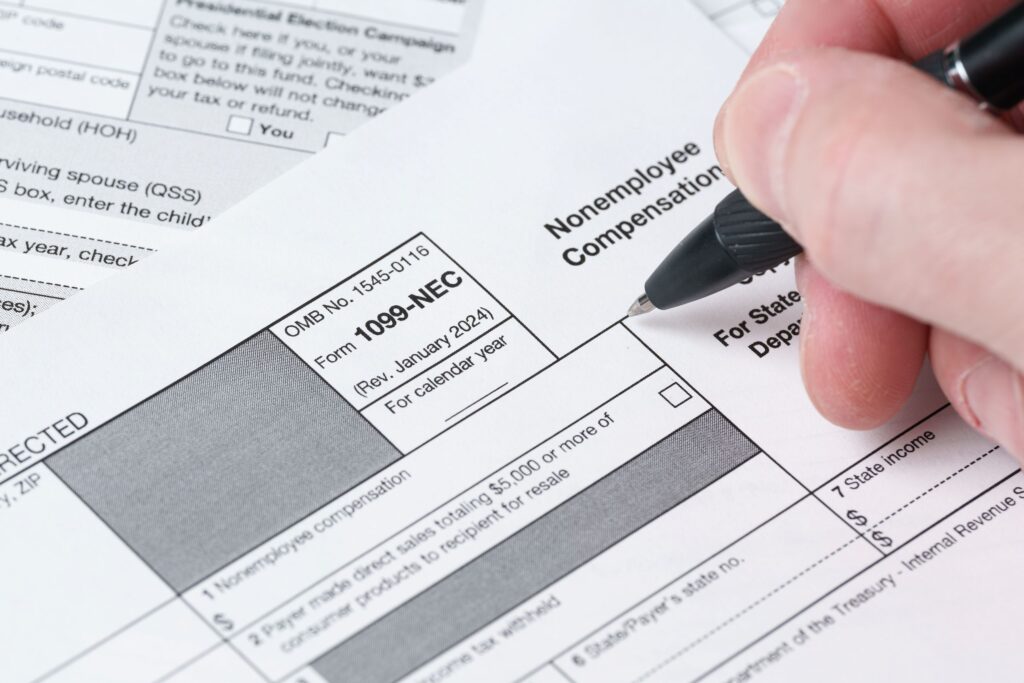
If your practice paid any vendor $600 or more in 2025, you likely owe them a 1099-NEC.
Miss this deadline?
The IRS won’t send you a polite reminder.
They’ll send penalties.
Why the IRS Cares About Your Paperwork
Here’s what most practice owners don’t understand about 1099 reporting.
It’s not just bureaucratic busywork.
The IRS requires this documentation because it legitimizes the expense on your books.
Think of it as the paper trail that proves your deduction actually happened.
When you file a 1099-NEC, you’re creating a match.
Your deduction connects to income reported by the recipient.
Without that match?
Your expense sits there looking suspicious; an unsubstantiated claim just waiting to be questioned.
And in an audit, unsubstantiated deductions attract penalties and interest the way a waiting room attracts pharmaceutical reps.
That IT consultant you paid $3,000?
Without the 1099, the IRS has every right to disallow the deduction entirely.
Suddenly you’re not just paying a penalty.
You’re paying taxes on income you already spent.
The Blind Spot Most Practices Share
Here’s what I see over and over again.
Clinical contractors get handled beautifully.
Nurses.
Medical assistants.
Locum tenens providers.
These folks flow through your payroll system or get flagged by your office manager without a second thought.
The blind spot?
Administrative vendors.
Your IT consultant who keeps your EHR running.
The HVAC company that services your building twice a year.
The attorney you called when that contract looked suspicious.
The marketing agency redesigning your website.
The medical billing trainer who flew in for that staff workshop.
These payments accumulate quietly throughout the year.
And come January, they’re the ones that slip through the cracks.
The Fix Takes Less Time Than Your Morning Coffee
Pull your accounts payable records for 2025.
Identify every vendor you paid $600 or more.
Collect a W-9 from anyone who hasn’t already provided one.
Yes, you should have required the W-9 before that first payment went out.
But better late than never beats never at all.
Here’s the beautiful thing about the W-9: it does double duty.
It gives you their tax ID for reporting.
And it tells you their entity type.
Corporations are generally exempt from 1099-NEC reporting.
So a completed W-9 naturally filters your list; one less form to file for every vendor that checks the “corporation” box.
The Clock Is Ticking
January 31st isn’t just the filing deadline.
It’s the date your vendors must receive their 1099-NEC forms.
That means you need time to prepare, print, and mail.
Or upload to your e-filing system.
Every day you wait compresses the timeline further.
Miss the deadline?
The IRS penalty structure scales with how late you file and how many forms you missed.
A few days late costs less than a few months late.
But “costs less” still means it costs you.
One afternoon of administrative housekeeping now protects thousands of dollars in legitimate deductions later.
Don’t let a paperwork oversight turn a valid business expense into an audit liability.
If sorting through vendor records and W-9 requirements sounds about as appealing as a root canal without anesthesia, I get it.
You didn’t go to medical school to become a compliance officer.
That’s what I’m here for.