
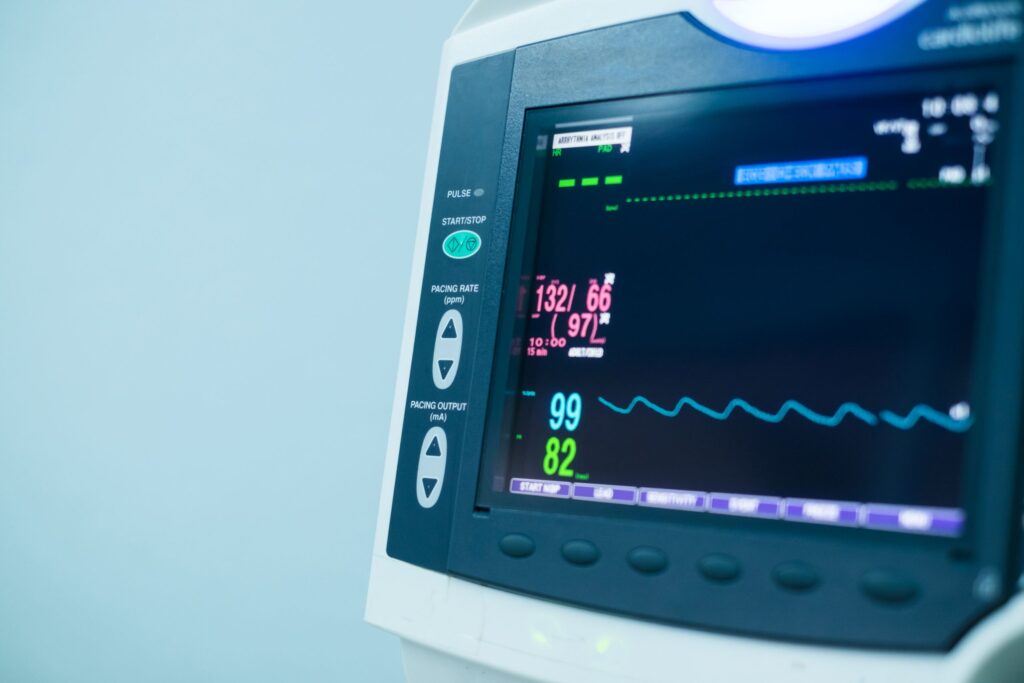
You spent the better part of a decade learning to read a human body.
Anatomy; pharmacology; the precise way a symptom in one place quietly announces a problem somewhere else entirely.
Then you opened a practice, and discovered that nobody had ever taught you to read its books.
The Training You Never Got
Somewhere between your first semester and your last shift of residency, you logged thousands of hours learning to keep people healthy.
You logged exactly zero learning to keep a business healthy.
This is not a character flaw; it is a curriculum gap.
Medical school does not offer a rotation in cash flow; residency never pages you at three in the morning about your contribution margin.
So when the practice finally became yours, you did the only sensible thing available to you.
You reached for the instincts that had never once let you down, the clinical ones, and you pointed them at a problem they were never built to solve.
You would never diagnose a patient from a single lab value drawn once a year.
Yet that is very nearly what most practices do with their finances.
The blood gets drawn every April, the tax return comes back, and you read it the way you would read the chart of a patient who has already left the building.
Where the Gap Quietly Bills You
The trouble with a gap like this is that it does not announce itself; it simply charges interest.
It tends to show up in three places, reliably.
✓ Capital decisions. You finance the build-out, the imaging equipment, the second location on a banker’s enthusiasm and a gut feeling; nobody models what that financing actually does to your taxes or your cash position eighteen months from now.
✓ Staffing decisions. You add a provider because the waiting room is full, which feels like the right signal to follow; you have no idea what margin that provider actually carries, so you cannot say whether the hire makes you wealthier or simply busier.
✓ Tax decisions. The bill arrives in spring like weather, something that happens to you rather than something you steered; by the time you see the number, every lever that might have changed it is already out of reach.
None of these are failures of intelligence.
They are failures of information, arriving far too late to act on.
A Postmortem Is Not a Plan
Here is the genuinely uncomfortable part.
The annual tax return, the document most practices treat as their financial checkup, is not a checkup at all.
It is a postmortem.
It tells you, in clean and certain detail, exactly what happened to a year you can no longer touch.
It is accurate; it is thorough; it is completely past tense.
And a practice run entirely on past-tense information is a practice flying with its instruments pointed firmly out the back window.
You did not train for a decade to make six-figure decisions on a hunch and a rearview mirror.
You trained to read the vitals while there was still time to change the outcome.
So Here Is the Question
What would it look like to have someone reading those vitals all year long, instead of writing the autopsy every April?
That is not a rhetorical flourish; it is a real and answerable question.
It is also the subject of next week’s piece, where we trade the postmortem for a care plan and walk through exactly what year-round fiscal guidance does across the four decisions that quietly run your practice.
For now, it is enough to simply notice the gap.
You were trained to heal.
You were never trained to forecast; and a thriving practice quietly needs both.
When you are ready to stop reading the autopsy and start reading the vitals, let us talk.